Dog Play & Social Skills Explained
Appropriate Puppy Interactions With Other Dogs
When puppies interact with other dogs, play is often assumed to be automatically positive. Watching puppies wrestle and chase can look cute and harmless, but not all play is good play. In fact, many behaviour issues later in life stem from inappropriate or poorly managed puppy interactions.
Understanding what healthy play looks like, recognising red flags early, and knowing when to step in can make a huge difference to how your puppy feels about other dogs long term.
What Healthy Dog Play Looks Like
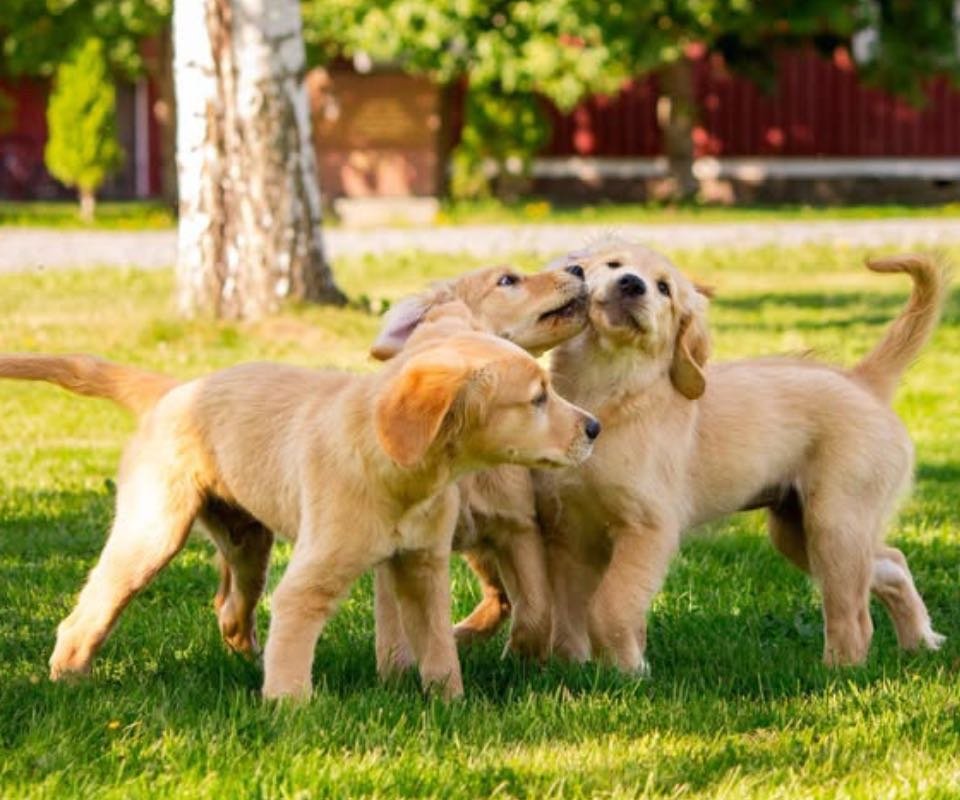
When our dogs play/interact with other dogs, there are two key things to look for: balance and pauses. These elements tell us whether the interaction is genuinely enjoyable for both dogs or whether it is tipping into something overwhelming or unsafe.
Balance refers to turn-taking. In healthy play, both dogs take on different roles. You may see some chasing, some rolling, some mouthing, and regular role reversals. If one dog is consistently doing all the chasing, all the pinning, or all the biting, the interaction is not balanced.
Puppies and teen dogs, in particular, struggle with impulse control and self-regulation. They can easily overwhelm older, smaller, or quieter dogs without meaning to. An interaction that looks energetic and fun to one dog may be stressful or uncomfortable for the other dog involved.
Pauses are just as important. These are short breaks in play where dogs disengage, sniff the ground, shake off, or momentarily move away. Pauses allow dogs to check in with their own arousal levels and decide whether they want to continue or take space.
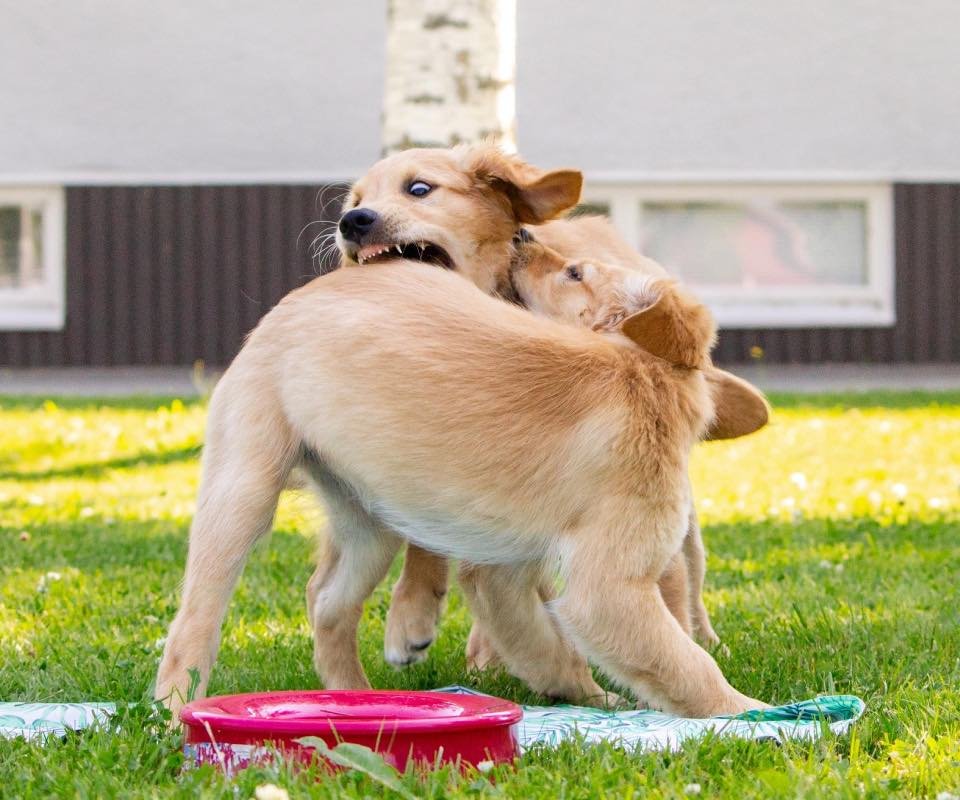
Many puppies and teen dogs are very poor at offering pauses and even worse at recognising when another dog is asking for one. Without breaks, arousal rises quickly. This is often when older dogs feel their boundaries are being ignored and may resort to much firmer corrections simply to get the other dog to stop.
It is important to remember that it is not another dog’s job to teach or correct your dog. Relying on older dogs to “sort it out” is unfair on them and risks creating negative experiences for everyone involved.
If you are not seeing balance and pauses naturally, step in and create one. A simple and effective way to do this is to scatter a handful of treats on the ground. Sniffing interrupts rough play, lowers arousal, and gives both dogs a chance to reset before deciding whether they want to continue. You may also need to separate the dogs by putting them on lead if you’re on a walk, or using different rooms at home.

How Puppy Play Often Goes Wrong
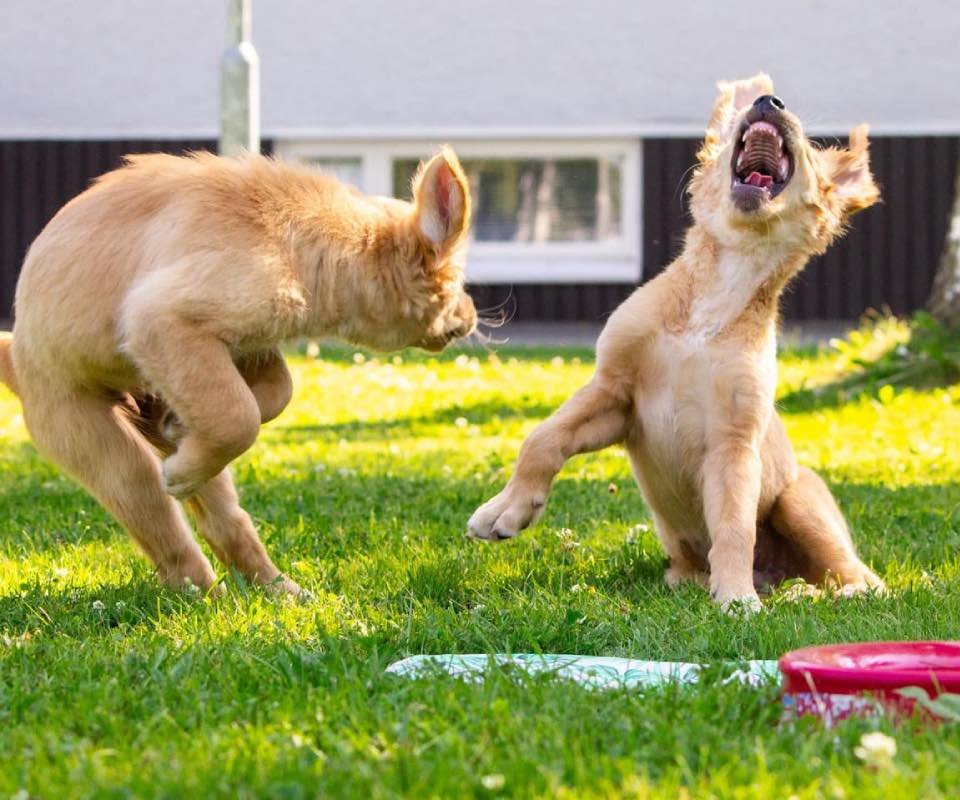
The biggest mistake guardians make is assuming that lots of play with lots of dogs equals good socialisation. High-arousal, rough-and-tumble play with unfamiliar dogs or equally excitable puppies is rarely beneficial.
Many pet shops and daycare centres offer puppy play sessions advertised as socialisation. Unfortunately, these environments often fail to provide the safe, controlled learning puppies actually need. Most are not run by qualified behaviour professionals, and staff are rarely trained to read subtle canine body language. Early signs of stress, fear, or over-arousal are easily missed.
In these settings, confident puppies often overwhelm quieter ones. Bold puppies learn that pushy, rude behaviour works and is fun, so they rehearse it again and again. These habits frequently carry into adolescence and adulthood, where the dog approaches others with the same intense energy. Eventually, they will meet a dog who does not tolerate this behaviour, which can result in fights or frightening overcorrections.
Shyer or smaller puppies tend to have the opposite experience. Instead of learning that dogs are safe, they learn that dogs are unpredictable and overwhelming. These early negative experiences can contribute to fear-based reactivity, avoidance behaviours, or ongoing anxiety around other dogs.
There is also an increased risk of physical injury when puppies of very different sizes or confidence levels are thrown together without structure. On top of this, puppies who are allowed to greet and play with every unfamiliar dog may later struggle with frustration-based reactivity when restrictions become necessary during adolescence.
What to Choose Instead
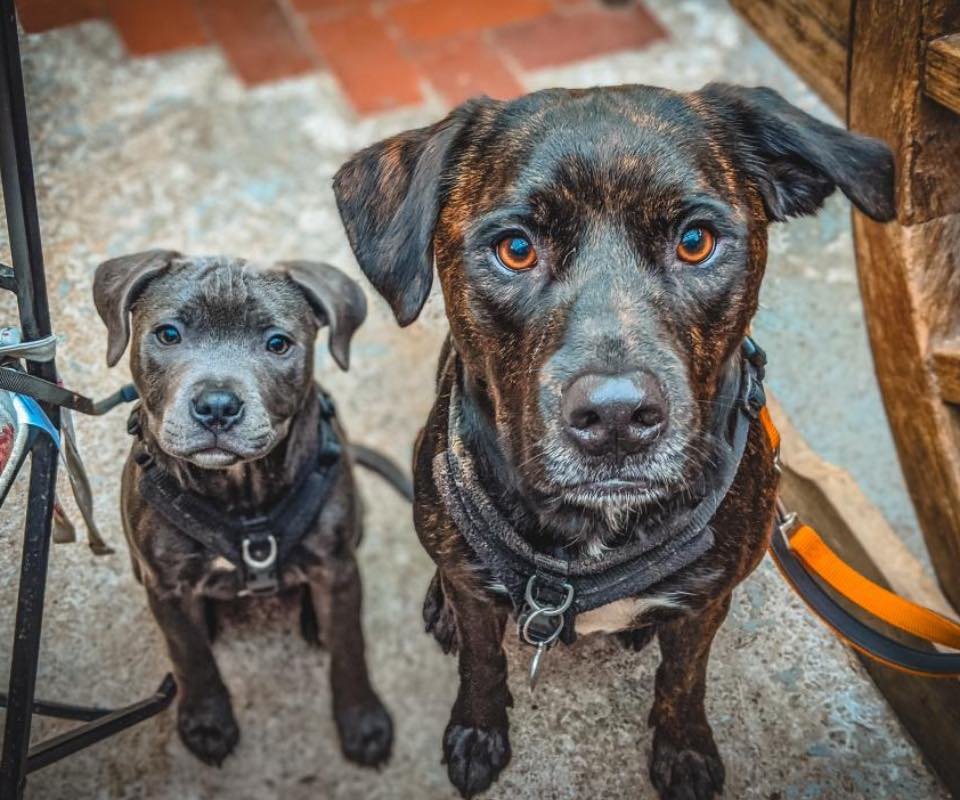
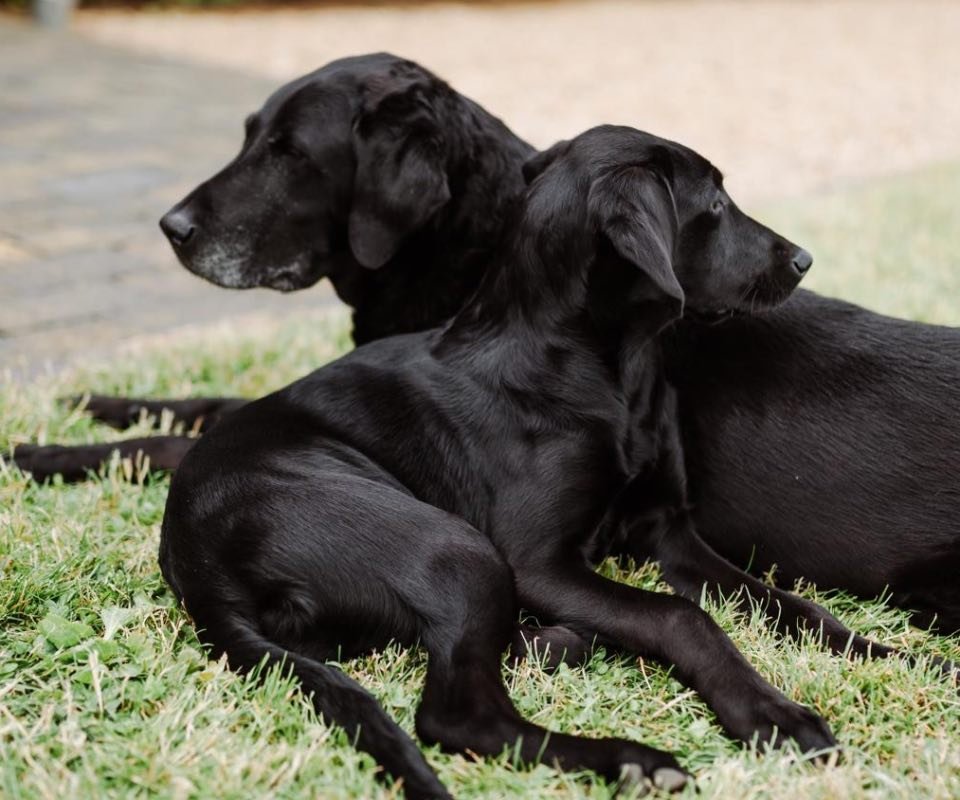
The best kind of social learning for puppies is calm and low pressure. One of the most valuable experiences you can offer is going for a walk with a known, steady adult dog. Your puppy can remain on a long line while the older dog moves freely, allowing your puppy to observe appropriate body language, pacing, and social skills.
On these walks, puppies learn by watching. They see how adult dogs move through the environment, sniffing, marking, investigating, and disengaging naturally. They learn that other dogs are simply part of the world, not something to become highly aroused or overly focused on. This kind of parallel exposure builds neutrality, confidence, and emotional regulation.
If you choose a puppy class, look for a trainer-led programme with controlled, purposeful interactions. Good classes prioritise safety, allow puppies to opt out of interactions, and focus on confidence-building and polite greetings rather than chaotic free-for-alls.
Advocate for your puppy’s space. Step in early, interrupt play when needed, and prioritise calm, positive experiences over intensity. The goal of puppy socialisation is not to create a dog who wants to play with everyone, but a dog who can share space comfortably and move through the world with ease.
Low arousal is key. Whatever behaviours your puppy practises now are the behaviours they are most likely to repeat later. Make sure you are rehearsing calm, thoughtful interactions rather than over-excited ones.